Mitigate Rising Costs

Deploy intelligent automation at scale

Maximizing profit by minimizing cost.

Price hikes for drugs, labor and real estate. Compliance with new regulatory requirements. Macroeconomic conditions. A major pharmaceutical wholesaler fights the rising tide of costs by deploying intelligent automation at-scale.

This supply chain innovator supplies branded, generic, over-the-counter and specialty pharmaceuticals to retail chains, independent pharmacies and institutional providers. Through continuous innovation and technological evolution, they have built a sophisticated supply chain.

Way back in 2000, the company started using automated technology, which included a central belt or “A-frame” system. The wholesaler aggressively evaluates and adopts new technology, so it’s not surprising that they’ve since added robotic goods-to-person picking to their operations. The picking robots can work around the clock.

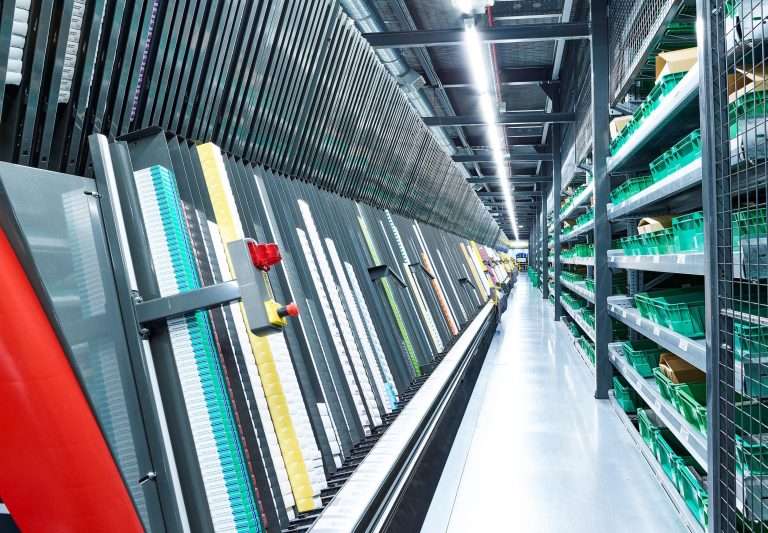
KNAPP A‑Frame automated dispensing system rapidly fulfilling high‑volume, low‑margin items to reduce labor costs, increase order accuracy, and maximize distribution profitability.
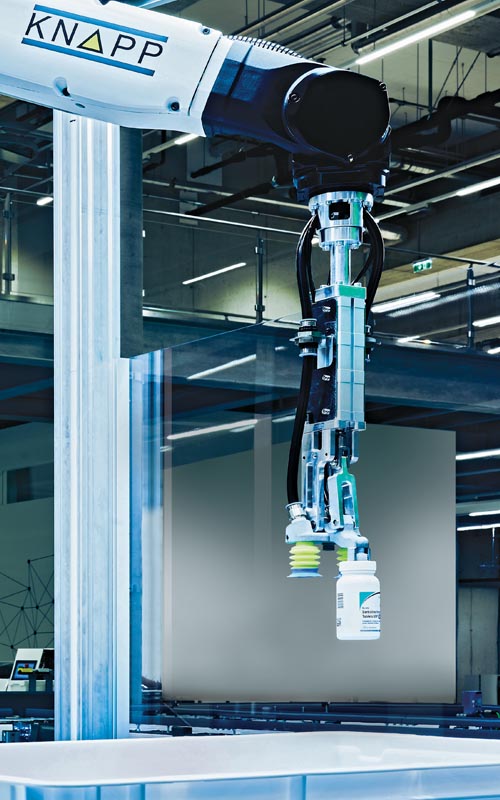
Pick‑it‑Easy Robot automatically increasing fulfillment performance by executing fast, precise picking tasks that boost throughput, stabilize output, and reduce reliance on manual labor.

Increasing performance automatically.

The primary goals in deploying picking robots were to:

  • Lower costs
  • Increase performance
  • Fill labor gaps

The robotic picking system helps employees fill orders more efficiently by reducing strenuous and redundant tasks and by eliminating the need for warehouse workers to walk long distances to fill a single order.

Today, the picking robots run round the clock to keep delivery promises and make up for the ongoing shortage of workers. Orders are processed fully automatically —even during dreaded night shifts — all while fulfilling all Drug Supply Chain Security Act (DSCSA) legal requirements.

90%

of pharma executives are worried about macroeconomic conditions.

PwC Pulse Survvey of 2022

Doing more with less.

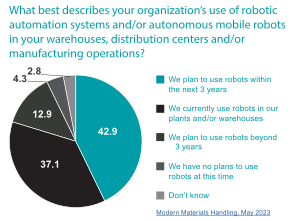
What best describes your organization’s use of robotic automation systems and/or autonomous mobile robots in your warehouses, distribution centers and/or manufacturing operations? An AI platform allows the robots to see, think and act autonomously. The entire fleet of robots continuously improves by learning from other cloud-connected robots on the network. The AI-powered robot:

  • Flexibly integrates into existing DC footprints
  • Quickly learns the broad and always-changing SKU mix of small and oddly-shaped pharmaceutical items
  • Recognizes different packaging and features on medicinal products
  • Exceeds performance requirements for manual stations with a “zero error” accuracy rate
Pie chart illustrating how organizations adopt robotic automation systems and AMRs within their distribution center operations to improve efficiency, accuracy, and overall fulfillment performance.

In many cases — with the same number of warehouse workers — the wholesaler is able to dramatically increase overall warehouse performance through consistent and continuous picking performance.

Ongoing innovation, technological evolution, and an “optimize everything” mindset have helped this pharmaceutical wholesaler build competitive advantage while maintaining profitability in the midst of rising costs and a tight labor market.

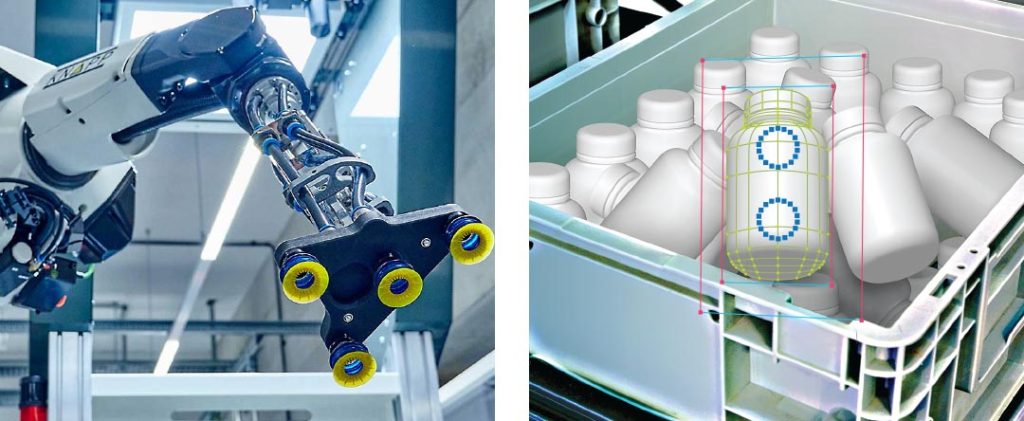
Side‑by‑side images showing a Pick‑it‑Easy Robot automating precise item handling alongside pharmaceutical products, highlighting efficient, high‑accuracy fulfillment for regulated healthcare and pharma distribution.

More insights

Subscribe to our blog

Let’s make complexity simple.