
In a world where everyone is competing for the same limited labor pool, retail organizations can no longer hire their way through peak seasons. This new reality is changing the way the industry copes with labor shortages.
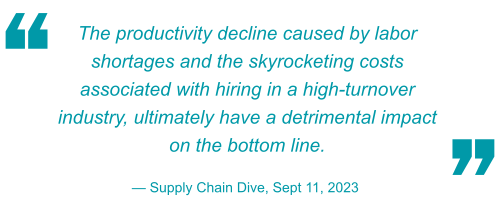
According to Supply Chain Dive, “The focus has shifted from hiring to getting the best out of the talent you have. Deploying more automation is now a top strategy to address issues during peak season.” They recommend automation that:
- Reduces dependence on labor
- Streamlines high-volume processes
- Mitigates human error
This business case shows how automating core logistics processes can help you do more with the same-size staff — both on the floor and in the office.
Create a high-tech, human-centric work environment
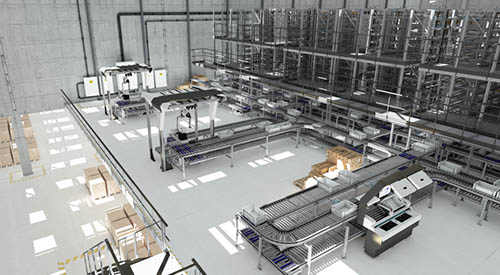
Modern robotics and automation technologies can help you create a better environment where operators work smarter, not harder. They also allow you to make the shift from a push system to a pull system.
Instead of operators walking miles a day, picking items from multiple floors of shelving spread out over hundreds of thousands of square feet of space, goods come to them. This design shift can more than double the productivity of operators.
- Automation does the heavy lifting and eliminates boring, repetitive and unsafe tasks.
- Software drives decision-making and enables fast, error-free order processing.
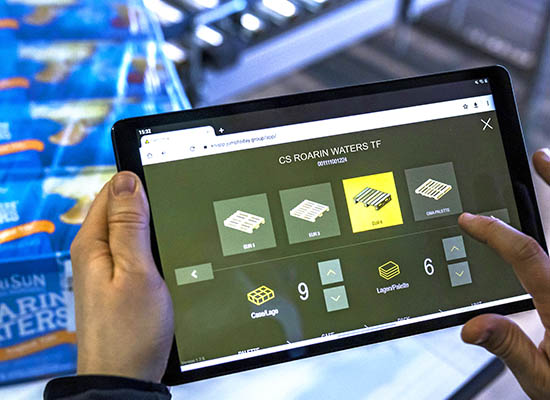
- Operators become smart workers with all the essential information they need at their fingertips.
A high-tech environment appeals to a younger generation of workers and makes them more likely to stay. The best systems have easy-to-use interfaces that enable rapid onboarding in multiple areas throughout the warehouse. Intuitive human-machine interfaces (HMIs) allow more flexibility during peak seasons. Operators can be moved where needed and be working productively in minutes.
Deploy low-touch automation systems
The goal of low-touch is to relieve people from strenuous, ergonomically unsound jobs and offer more suitable tasks that generate value for the entire system of operation. The fewer the touches, the higher the return.
Low-touch distribution or fulfillment can be achieved by integrating four separate systems. The systems are modular, so this can be done over time if desired..
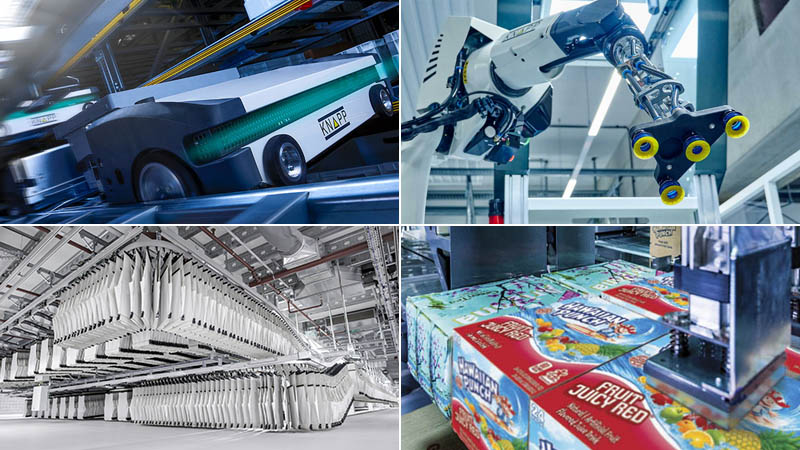
- Fully automate order processing and retrieval with an intelligent shuttle system that supports both eCommerce and store replenishment workflows.
- For eCommerce, supplement manual workers with AI-powered picking robots that can automatically pick a wide range of items from and into different container types, including auto-induct into pockets.
- Deploy a pocket sorter with dynamic sorting and sequencing capabilities and self-opening pockets for auto drop off into packages. Use the system for both eCommerce and store replenishment workflows.
- For store replenishment, invest in a fully automated palletizing system that enables store-friendly deliveries, improves accuracy and reduces transportation costs by assembling high-density mixed pallets.
- Fully automate order processing and retrieval with an intelligent shuttle system that supports both eCommerce and store replenishment workflows.
This powerful combination of technologies not only reduces touches, it lowers cost for omnichannel operations and increases customer satisfaction.
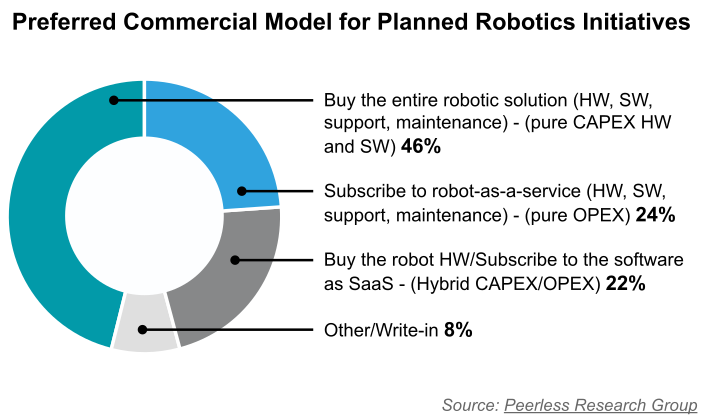
Peerless Research Group says integrated systems like these are preferred by supply chain leaders, because they:
-
- Accelerate implementation
- Speed payback
- Increase performance
Highly automated, integrated systems can also help you future-proof your warehouse and increase the value you offer customers over time. Plus, software-driven systems are inherently more flexible, so you can easily adapt to changing market conditions.
Manage it all in a single operating environment
There’s a lot of hodgepodge out there. Different environments for different systems. Many vendors to manage. Finger-pointing when problems occur. A lot can be gained from having a single operating environment that spans the entire logistics network.
When all software is under one umbrella, every environment has the same look and feel. Process designers, maintenance personnel and warehouse managers can work more efficiently and effectively. Once they know the system, the environment goes with them. There’s no need for duplicate experts.
A single software environment streamlines management of highly integrated systems within and beyond the four walls of the facility. It also makes it possible to get the insights needed to make better decisions faster across the entire logistics network. And if assistance is needed, there’s just one company to call.
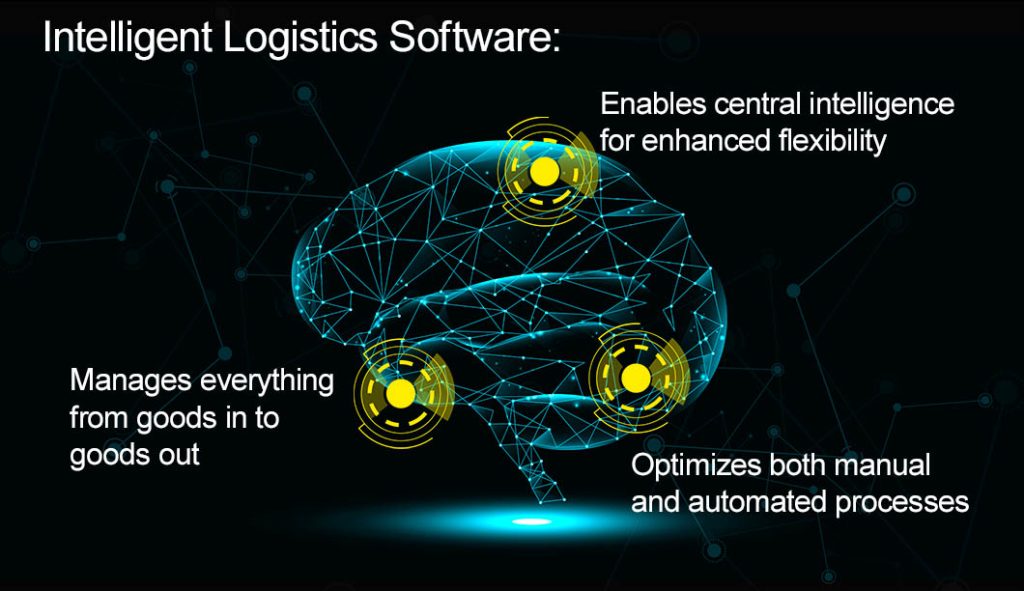
Intelligent logistics software drives everything in this operation. The warehouse management and control systems:
-
- Coordinate people, processes and automation technologies
- Precisely orchestrate the flow of goods and information
- Flexibly support new use cases with minimal change
Increase intelligence and build value over time
At any time, additional software capabilities can be added to continuously drive performance improvements. You can add:
- Intelligent automation data system for decoding item DNA and giving palletizing robots a deep understanding of the items they touch. The self-learning system automatically collects, distributes and maintains master data for unprecedented robotics performance.
- Advanced logistics analytics for enhancing visibility, accelerating decision-making and navigating the unexpected— all in near real-time.
- Warehouse operations control tower for automating and optimizing every aspect of day-to-day operations — from resource planning and training to real-time staffing optimization and dynamic order release based on live performance data. Historic data enables continuous improvement.
- Intelligent CMMS for automating every aspect of maintenance and management — from scheduling to event-controlled repair, prescriptive repair and life cycle analytics.
By adding these software systems, operations are faster. Insights are deeper. Investment protection is longer. When everything is integrated, interconnected and intelligent, retail organizations can create value end-to-end by:
-
- Minimizing labor dependency
- Simplifying workflows
- Reducing low-value touches
- Maximizing volume capacity
