SELECTION CRITERIA
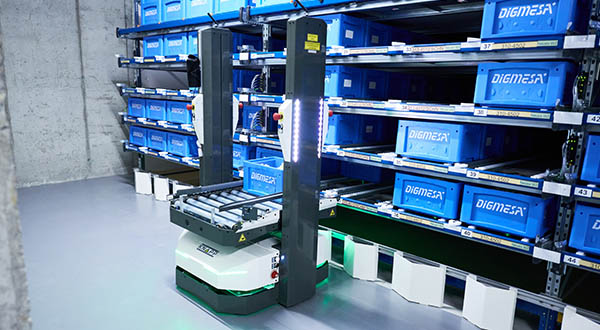
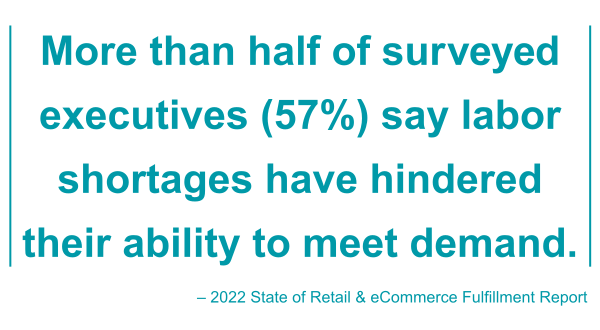
Rising labor costs are impacting warehouses. Autonomous mobile robots (AMRs) can be a meaningful addition to your distribution, fulfillment or manufacturing operations. If you’re evaluating AMRs for moving, picking, replenishing or sorting tasks, here’s a guide to get you started. Look for…
1. FLEX-ABILITY
Some AMRs can’t adapt to changing environments, processes or other circumstances. Once installed, it’s very complicated to change processes, layouts and vehicle behaviors.
- Look for AMRs that can be quickly and easily reconfigured by operators.
2. SIMULATE-ABILITY
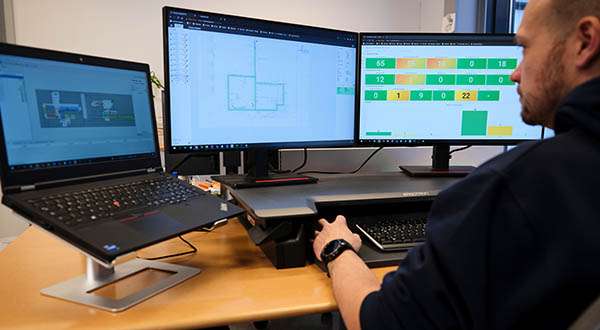
When changing applications and processes, some AMRs take a trial and error approach. Deploy it…and see what happens. Then, “rinse and repeat” until you get it right. This is an inherently inefficient way to test and validate performance impacts. Ask the vendor if you can simulate changes in a virtual environment before deploying in the real environment.
- Look for fleet control that includes digital twin simulation.
3. AFFORD-ABILITY
Some AMRs require large closed spaces, complex transport networks, customized pallets or integration by a third party. This all adds to overall cost. Others are designed for specific applications such as zone picking, tote retrieving and transporting parts to production lines.
- Look for easy-to-deploy AMRs that can navigate narrow aisles and accommodate different applications.
4. PERFORM-ABILITY
Some AMRs have prohibitive weight restrictions. Others can only handle one tote at a time at one height. Some are primarily plastic, have limited functionality, are difficult to use and prone to downtime.
- Look for high payload, multi-tote handling, adjustable height, consistent performance and mostly steel components.
5. SCALE-ABILITY
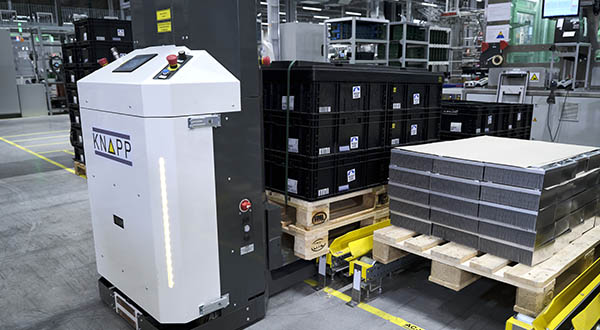
Some AMRs can only support a limited number of vehicles. Others only offer one type of vehicle. Ask how big the fleet can get and if the vendor provides container, pallet and forklift AMRs. See if the vendor offers rental or leasing options for peaks.
- Look for the ability to easily scale fleet size.
6. EVADE-ABILITY
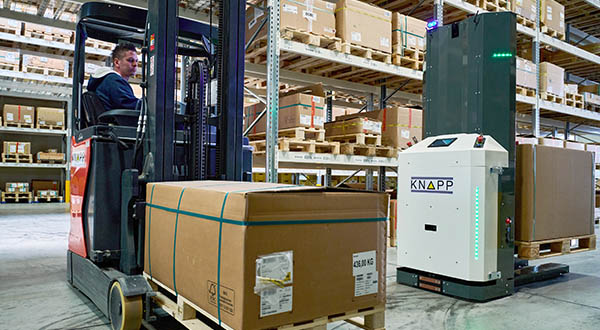
Some AMRs drive on virtual lines. If human workers get in their way, they simply stop. This hinders productivity. Make sure to ask if the system is 100% safe for human workers and has smooth evasive maneuvering.
- Look for AMRs with an advanced vision system and dynamic vehicle movement.
7. NAVIGATE-ABILITY
Some AMRs are based on old track-guided technology. Others can’t handle complex traffic rules without a lot of effort and additional cost. When evaluating AMRs, ask for on-site tests with multiple vehicles in narrow surroundings.
- Look for a high degree of integrated intelligence and dynamic navigation.
8. INTEGRATE-ABILITY
Some AMRs have their own non-standardized interfaces, which require custom integration. Others are very difficult to integrate into an already automated warehouse and can only operate as a standalone system. Some can’t change paths and flow on-demand.
- Look for AMRs that can be integrated into your WMS or WCS.
9. MAINTAIN-ABILITY
Some AMRs have very expensive spare parts, long delivery times for those parts and bad service. Others require an entire area to be shut down to remove defective vehicles.
- Look for easy access to service levels and the ability to continue operations during maintenance.
10. PARTNER-ABILITY
Some vendors are only interested in selling a vehicle. They don’t care about the use case. Others have limited availability and references. When evaluating AMRs, don’t just pick a product. Pick a partner that can help you build logistics value over time. Make sure they have the kind of intralogistics know-how that can help you mitigate labor shortages by minimizing manual touches. Discuss implementation and expertise in your industry. Make sure they have an extensive customer service network and you’ll have a single point of contact.
- Look for a partner who wins when you win.