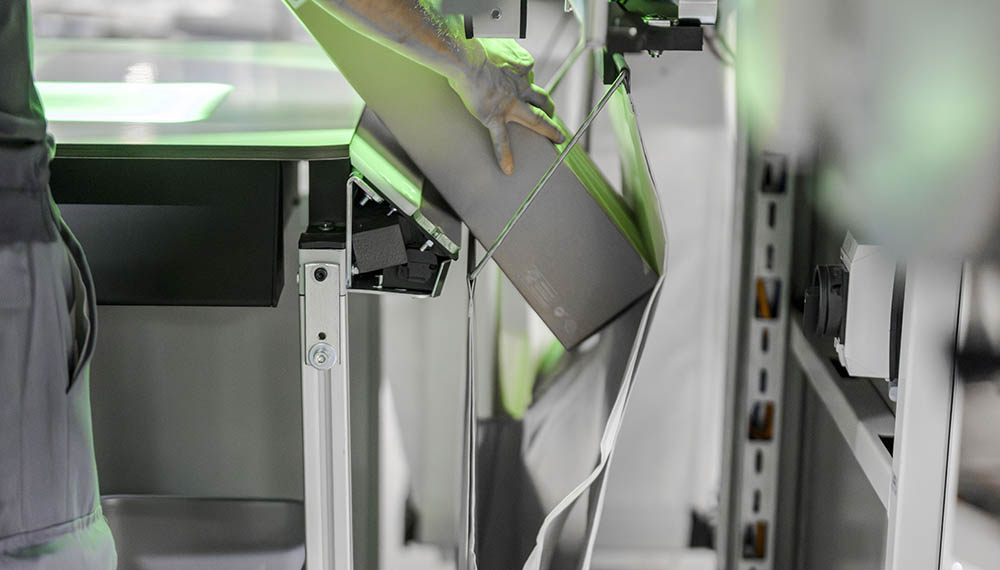
Optimize the flow of goods from inbound to outbound.
Zero-touch robotic picking into pockets. Accelerated returns handling. Order processing for wholesale, central fill and mail-order pharmacy in one pocket sorter system. Store-friendly replenishment. Retrofits that take advantage of overhead space.
Pocket sorters are popping up everywhere across North America and they’re performing a seemingly endless array of applications. Pocket sortation systems can help organize your warehouse with 100% tracking, simplify sorting with 100% sequencing, and optimize space and labor utilization with 100% access to all items at all times.
Retailers in the U.S. are investing and reinvesting in pocket sorters because they perform so well.
- REI uses pocket sorters in four different facilities.
- Skechers is expanding pocket sorter throughput for eCommerce and retail replenishment.
- A major American department store chain has just retrofitted two fulfillment centers with pocket sorters and is installing another pocket sorter system in its new fulfillment center.
- An American multinational technology company uses a self-opening pocket sorter system that can drop wearables and other GPS products into shipping bags, cartons or containers, without slowing down and without any human intervention.
Read on to discover ten pocket sorter applications for building modern value chains capable of handling today’s challenging logistics environment.
Application #1: Batch Picking
By marrying the functions of their order retrieval system with a two-module pocket sortation system, REI integrates their entire omnichannel operations. Products destined for stores and eCommerce customers are picked at the same time. The pocket sortation system has a dynamic buffer, so REI was able to make the switch from individual order picking to efficient batch picking.
Orders can be prioritized by order type, customer type or by provider. Picks into pockets take about six seconds. Batch picking keeps that rapid picking consistently constant. Eight people pick orders instead of the 30 people it took in a manual environment and just five people (not 40) handle packaging. Plus, recovery from peaks takes only a couple of days versus a couple of weeks. Rick Bingle, former VP of supply chain at REI says, “The ROI is huge.”
Application #2: Outgoing Goods Sortation
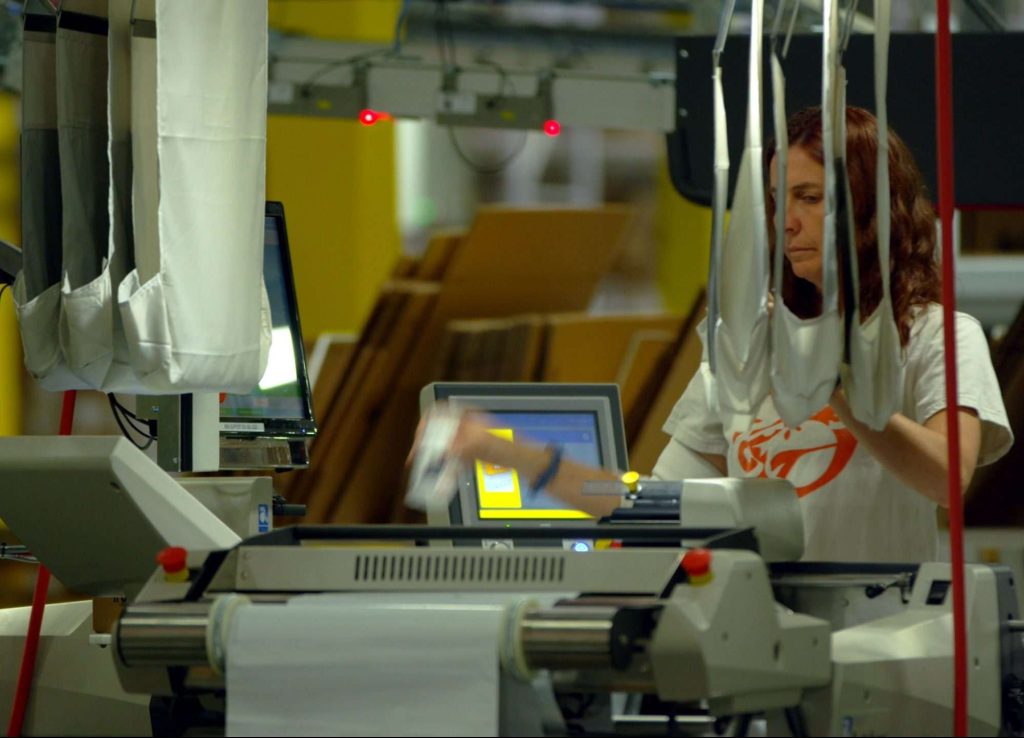
A separate pocket sorter module at REI sequences orders to carriers. With this two-tier sortation, REI can have all orders go to one carrier or they can split outbound orders to different carriers. This flexibility helps REI minimize shipping costs. Sylvia Wilks, chief supply chain officer at REI says, “Our new distribution center allows us to improve our delivery speed to customers and stores, increase our throughput capacity and agility, and lower costs.”
Application #3: Mail-Order Pharmacy
Even pharmaceutical wholesalers are jumping on the pocket sorter bandwagon. Limedika, a large pharmaceutical wholesaler and pharmacy chain in Eastern Europe, handles wholesale, central fill and mail-order prescriptions — all under one roof. The facility serves over 1,500 pharmacies and hospitals with multiple deliveries every day. Efficient batch picking with continuous tracking of serial and batch numbers allows for speed of delivery and traceability.
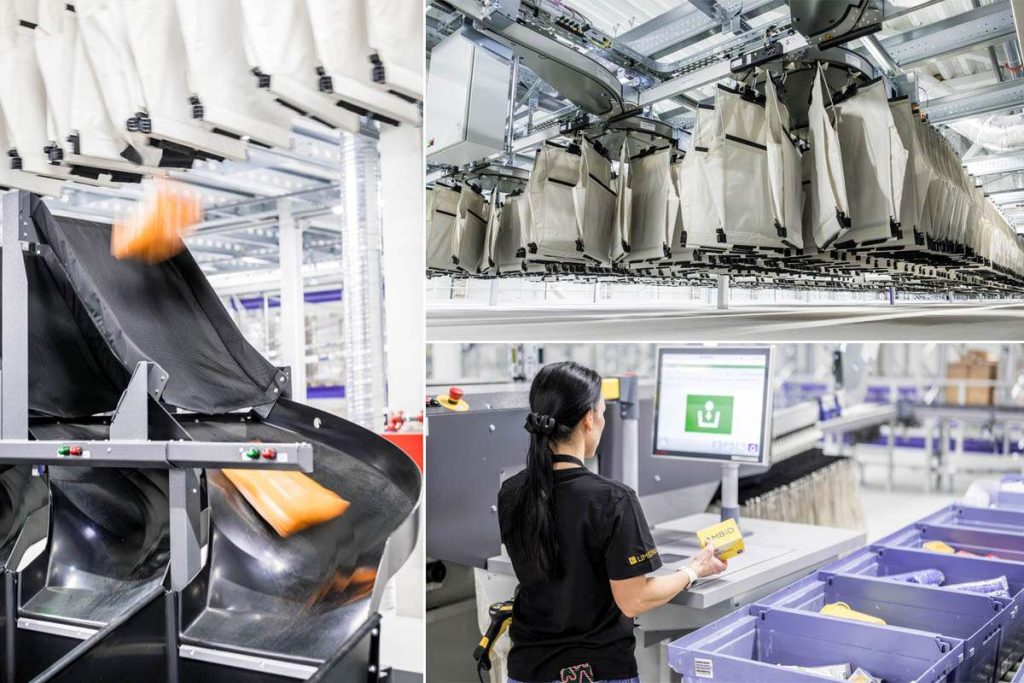
A complex process is greatly simplified by a self-opening pocket sortation system. Individual items for both mail order and store orders are manually inducted into pockets. A dynamic order buffer consolidates orders and drops items into chutes for packing. Once packed, orders are re-inducted into the pocket sorter system and automatically released into chutes for dispatch to patients, pharmacies and hospitals. With pocket sorters, Limedika sorts 2,500 items per hour, loads 835 items per operator and packs 400 items per operator.
Application #4: Store Replenishment
Inditex Group, parent company of fast fashion retailer Tempe, uses a self-opening pocket sorter system to supply over 5,500 stores worldwide. Shoes, accessories and handbags are rapidly processed. The system flexibly handles orders of varying sizes, containing from a few to hundreds of items. Orders are delivered in a store-friendly fashion; items are packaged just as they’ll be needed in each area of the store. The pocket sorter system can sort up to 6,000 items per hour per sorter, load up to 1,000 items per hour per loading station and pack up to 850 items per hour per operator.
Application #5: Returns Handling
Global online fashion retailer NEXT achieves low-touch returns handling in the UK with self-opening pockets. Returns that are likely to be resold within five days are immediately inducted back into pockets and stored in a dynamic buffer. When returned items are resold, they’re automatically dropped off without slowing down and without human intervention.
Application #6: Low-Touch Picking & Pre-Picking
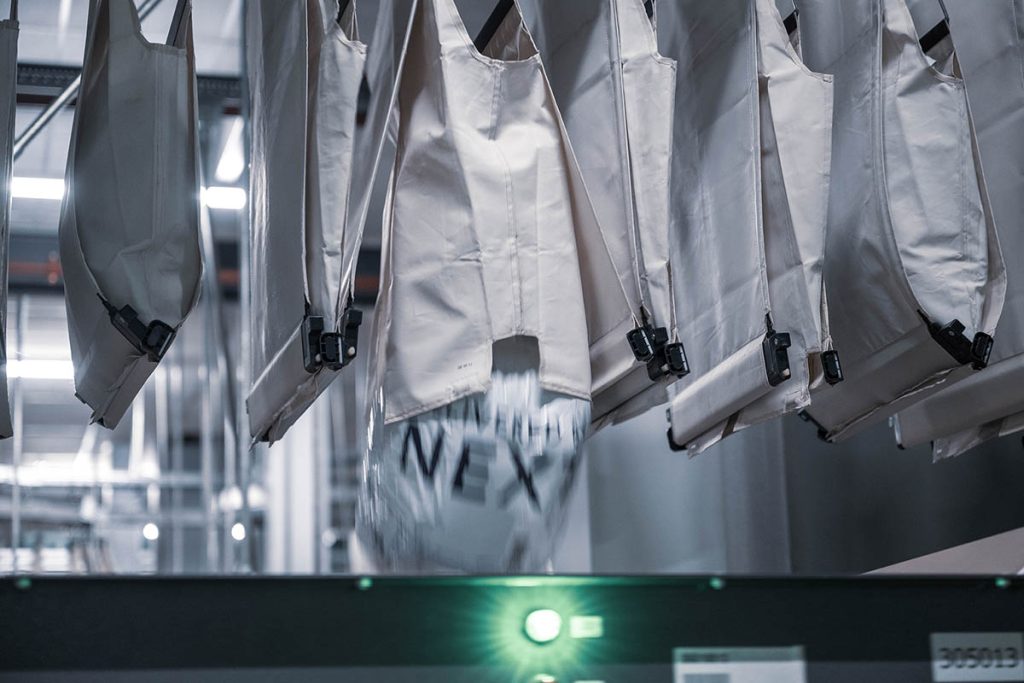
NEXT facilitates low-touch apparel picking using a two-tier pocket sorter system. This allows them to do more with a limited labor pool. During seasonal peaks such as Black Friday, NEXT pre-picks promotional items and prime stock into pockets. Filled pockets are stored in a dynamic buffer for rapid retrieval, saving valuable time and resources.
Application #7: Low-Touch Bagging
NEXT facilitates low-touch bagging with the pocket sorter system. Pocketable, single-item orders are automatically dropped into bags, which are dropped into chutes and automatically sequenced to outbound destinations. Oversized parcels are processed manually.
Application #8: Put Wall Automation
Order lines at wholesaler RS (formerly Allied Electronics) can be massive—up to 19 lines per order. Before deploying the pocket sortation system, it could take up to 12 hours to consolidate orders using a put wall. It was also a very people-intensive process. By re-engineering workflow from order picking to line picking, they essentially automated the put wall.
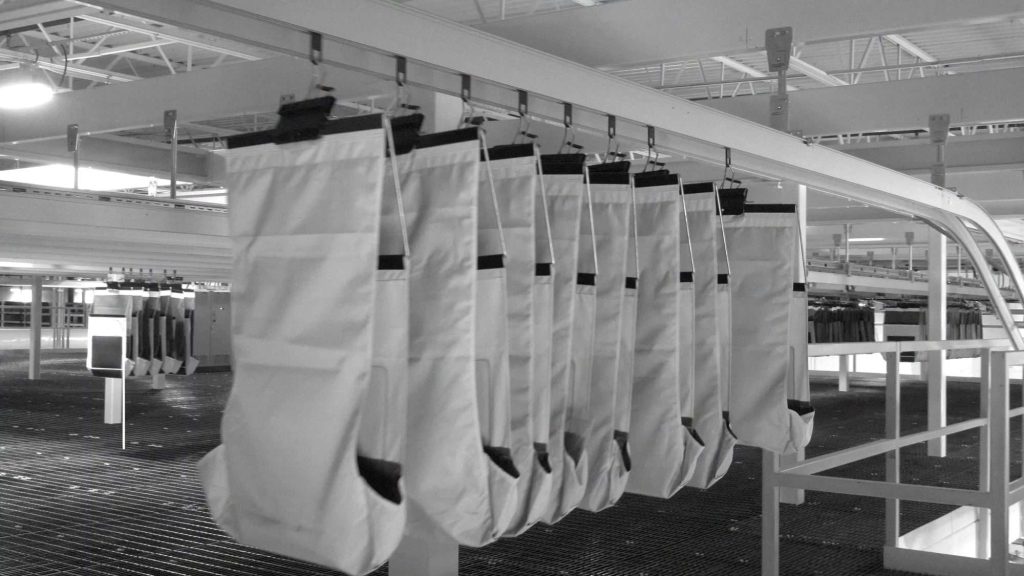
Multi-line orders are picked into pockets. Pockets are staged in the overhead system until all items are available to be packed. The pocket sorter acts as a pre-buffer to harmonize the various processing times. When all of an order’s items are ready, the required pockets arrive at the packing station in the correct sequence. Even as the number of lines per order at RS has increased, the time to fulfill orders has decreased. Instead of up to 12 hours, the average is 3 hours, which is accomplished with the same amount of people.
Application #9: Order Customization
The customer base at RS is industrial in nature and most orders are multiline, consisting of small electrical parts. The individual routing enabled by the pocket sorter system allows them to direct orders to special packing stations where kitting services are provided for VIP customers. The kitting services enable more efficient shipping for Allied Electronics, because all orders are shipped in one package. These services also save customers a lot of time and effort and help build competitive advantage in a high growth industry.
Application #10: Peak Sequencing
The Very Group designed its new Skygate FC in the UK for peaks. Skygate fulfills 95% of the Group’s online orders and handles peak volumes with the required speed and accuracy. Orders are ready for dispatch in just 30 minutes. With an inventory of six million items, sequencing is key to rapid order fulfillment and efficient returns processing at Skygate. Items are placed into pockets at a series of workstations, where totes arrive automatically from a shuttle system. Operators take an item from a tote, scan it and drop it into one of the pockets.