SELECTION CRITERIA
Automated palletizing has been around for decades, but the technology has not kept up with industry needs. New advances in software, system design and artificial intelligence (AI) make automated palletizers more capable and less reliant on manual labor. If you’re evaluating a palletizing system, here’s a guide to get you started. Look for…
1. TOTAL SYSTEM VALUE
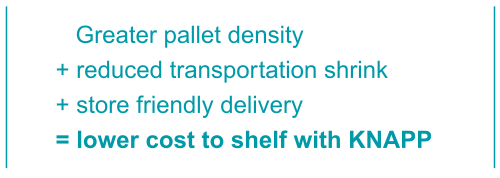
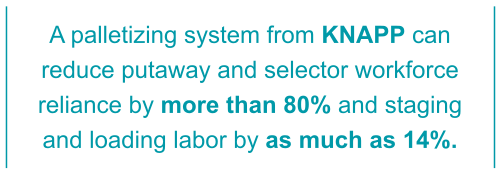
Some automated palletizers require predefined footprints best suited for new build installations. Others require upstream tracking to ensure strict sequencing of cases, which increases hardware and software complexity. Make sure to ask how the system design impacts staffing and how it deals with inventory scratches on the fly. Also ask about operator fault correction and safety. Identify a partner that is willing to simulate outbound pallet density, stability and the ability to build store-friendly pallets. These all have significant impacts on operational costs.
- Look for a system that reduces costs associated with labor, transportation and shrink.
2. HIGH PERFORMANCE
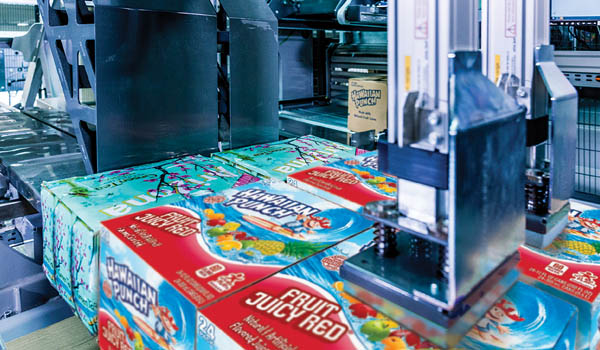
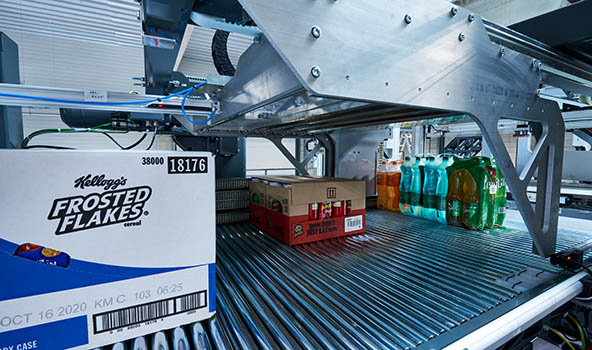
Some systems require dedicated stations for unfriendly case sizes or packaging types. Others can only place a single case at a time on a pallet and can’t always ensure stability. Still others can’t nest totes within the same pallet build. Make sure to understand the empty pallet exchange methodology and the average outbound rate, not just the peak machine rate. These considerations will dictate the system’s flexibility and adaptability for future business requirements.
- Look for dynamic, multi-item picking of the widest range of articles in a single cycle of robotic movement.
3. OPTIMIZED PALLET BUILDING
Most systems have no way of accommodating case-handling characteristics. They can’t tell the difference between crushable and non-crushable items, which can lead to unstable loads and costly damage during transport. Others don’t have all the packaging attributes needed to maximize pallet density, so transportation costs are higher. Some don’t have the smarts to build store-friendly pallets or deal with out of stocks.
- Look for intelligent packing software that can recalculate in real-time without canceling orders.
4. DYNAMIC ORCHESTRATION
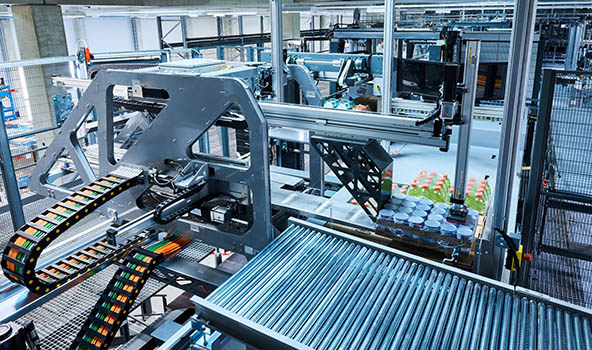
Some systems have their own non-standardized interfaces and require time-consuming and costly custom integration. Others are very difficult to integrate into an already-automated warehouse. Make sure to talk about compatibility with host systems. Ask about integration and the handshake between the palletizing system supplier and all third party subsystems. Make sure you understand how they manage strict sequences within automated storage as well as upstream and downstream conveyor networks.
- Look for precise orchestration of people, processes and technology across the entire operation.
5. SIMPLIFIED SEQUENCING OF MATERIAL FLOWS
Some systems have complicated material flows, which makes balancing very complex during peak volumes. Others are difficult to resynchronize in the event of a fault or error, and can be challenging to resolve promptly. Ask how the system maintains balance across all subsystems and dependencies upstream and downstream.
- Look for a system that delivers a consistent flow of goods in a balanced way.
6. MODULARITY
Remember the Lego Principle. By design, a Lego piece interlocks with other Lego pieces to create something bigger and infinitely better. A solitary Lego piece can never achieve its ultimate purpose. This design principle also applies to automation systems. Look for a tech partner that has a holistic outlook and a system with modular building blocks designed to interconnect, so they can be seamlessly integrated within a live environment as business needs change. For example, start with semi-automated case picking workstations today and add fully-automated palletizing when you are ready.
- Look for system design that anticipates future SKU and volume growth.
7. SAFETY AND MAINTENANCE
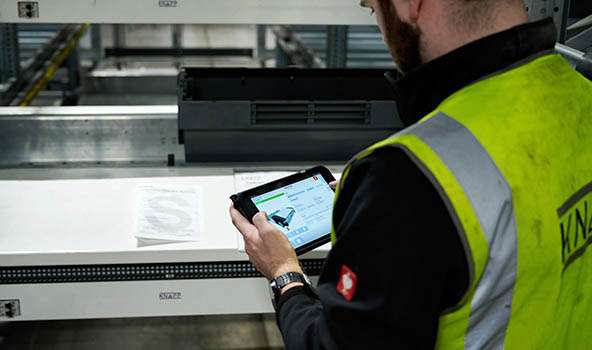
Don’t discount accessibility. Efficient yet safe operator egress should be a core design tenant for fault correction. Ask the vendor to explain their design logic and to walk through error-handling and maintenance procedures.
- Look for an easily-accessible system and maintenance routines that maximize system uptime and availability.
8. A PRODUCT AND A PARTNER.
Don’t just pick a palletizer. Pick a partner that can help you build logistics value over time. Make sure they can help you build the right solution for the right application based on data, operations and software integration requirements.
- Look for a tech partner that can help you develop a short- and long-term technology strategy.