
Logistics operations have never been more challenging
Labor shortages, labor retention and the high cost of labor continue to plague the industry. Freight delays and the resulting out-of-stocks stubbornly persist. Unprecedented shipping prices and an uncertain economy make decision-making difficult. Continuous waves of disruption require companies to be able to change direction on a dime.
In such an uncertain environment, leveraging data has never been more important. Here are four ways the right software can help you drive success in warehouse management and achieve operational excellence.
- 1. Forecasting demand without excessive over or under planning
On a day-to-day basis, most companies have difficulty anticipating where their volume will come from and how much they should expect. Machine learning algorithms are trained on historical data to be able to anticipate growth factors, so volume fluctuations can be predicted and operations can plan against reality.
redPILOT, our warehouse operations control tower (aka warehouse resource planning and optimization) has a demand forecasting feature that calculates expected demand several weeks in advance. During a pilot project, a renowned sporting goods manufacturer used this new capability. The manufacturer was able to better plan against expected demands and have enough labor hours to meet critical shipping times. And they did it without wasting time and money on excessive overplanning.

- 2. Scaling good decision making
Making better decisions faster is essential for success in today’s volatile environment. While seasoned operations leaders may make the right decision most of the time, replicating good “gut” decisions across a distribution or fulfillment network is difficult.
To effectively scale good decision making, you have to standardize the decision making process by combining the knowledge and instincts of experienced operations leaders with active data from across your enterprise. The day-to-day operation of distribution and fulfillment centers requires active data from all of these disparate systems:
- Enterprise Resource Planning (ERP)
- Warehouse Management Systems (WMS)
- Warehouse Control Systems (WCS)
- Time and Attendance Systems
- And more
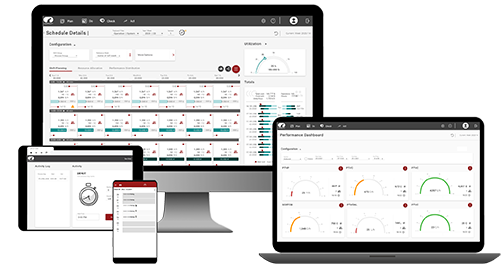
Unifying all this siloed data and having it readily available in one place provides a clear picture of logistics operations, real-time demand and the resources required to fulfill that demand. A holistic picture of operations also helps to:
- Identify inefficiencies
- Manage costs
- Make more timely and intelligent decisions
With this enhanced operational intelligence, managers and team leaders can optimize shift plans, detect and mitigate bottlenecks in real time and access reports and mission-critical key performance indicators (KPIs) for better decision-making and increased efficiency.
- 3. Engaging and retaining your workforce
Labor is a top operating cost for warehouses. The high cost of labor and increasing competition for skilled workers will only get worse as Baby Boomers continue to leave the workforce and Gen Z looks for more meaningful work. Logistics leaders must adopt new strategies for attracting and retaining talent and optimizing labor.
Strategies for using technology to engage, motivate and keep workers happy can help. Two of the biggest demands by employees are shift flexibility and well-being. Empowering workers to swap shifts, self-select shifts or reduce hours can contribute to employee satisfaction. Manual shift planning and spreadsheets simply won’t cut it with today’s workers, team leaders and managers.

Giving direct feedback on worker performance is a great way to engage employees, especially when this information is used as a carrot instead of a stick. Sharing individual performance data and incentivizing performance makes it possible to acknowledge and reward high performers and provide coaching for those who need it. A growing number of companies are doing this with gamification.
The redPILOT PLANNER and mobile teamAPP make all this possible. These resource planning tools provide a complete view of your operation and automate every aspect of shift planning, so no more spreadsheets.
- 4. Improving sustainability and performance
Consumers increasingly care about the environmental impact of the products they buy. Companies care too, but are concerned that sustainable operations may impede performance.
The exact opposite is true. Green logistics have great potential to improve sustainability and performance in logistics operations. Of course, the greening of today’s supply chains requires data. When operations are data-driven, you can:

- Optimize inventory and minimize waste
- Reduce power consumption and increase the utilization of space
- Enable last-mile delivery efficiencies to reduce emissions
