
THE CHALLENGE
Increasing eCom profitability while
maintaining quality customer experience

THE SOLUTION
Automated back-of-store
micro fulfillment
Seize the “Shopportunity”
Digital Grocer says “revenue growth in grocery over the next 5 years is expected to be online. Instore sales will grow at 0.2 percent per year, whereas online grocery sales will grow at 4.5 percent.”
From a consumer’s perspective, it’s hard to beat the convenience of online grocery shopping. Most retailers today rely on manual fulfillment, but struggle with profitability. Rising food and labor costs are making this model even more challenging for food retailers. Eroding profits may force some retailers to abandon eCommerce entirely.
When a large national retailer wanted to improve profitability in their fulfillment operations, they turned to modular autonomous robotics, intelligent logistics software and sector-specific expertise. Automated micro fulfillment was the way to go. They understood that instore manual fulfillment was fine in the short term, but it’s not a financially sustainable business model longer term.
Nearly
50%
of the country’s population buys groceries online
–Statista
More convenience for customers and low-cost pick
In 2018, the grocer piloted its first MFC, and they’ve never looked back. They’ve since added a series of new locations that are helping them deliver more groceries faster in highly concentrated areas.
Located inside an existing store, the MFCs typically hold anywhere from 8,000 to 12,000 of the local market’s most popular products. With the ability to handle ambient-temp, fresh and frozen goods, all three temperature zones can be automated.
The MFC is close enough to customers for same-day delivery. Completed orders can be picked up in as little as 30 minutes or delivered within a 2-4 hour window with one of their trucks. The grocer also offers one-hour delivery through a third-party partner. Here’s how the food retailer offers all of these convenient options to customers.
From an order perspective, the MFCs operate like a store within a store. Incoming goods arrive from the same warehouses. Goods are tagged either for the store upfront or the MFC in back. No incremental deliveries or new routing logistics for delivery vendors are required.
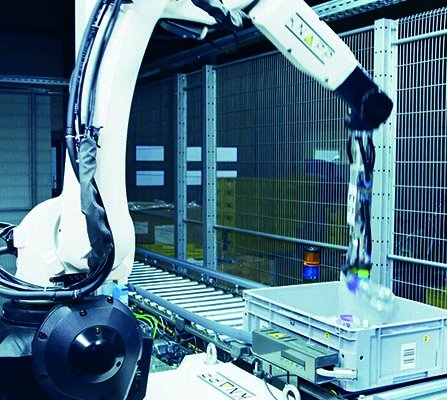
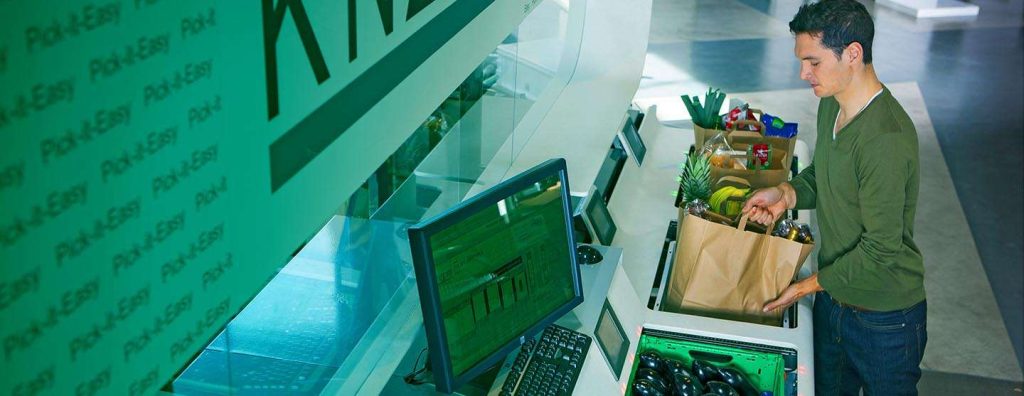
When an online order comes in, a highly automated shuttle system rapidly retrieves stored items and conveys them to a goods-to-person picking station, where groceries are sorted for individual orders.
- Each tote holds up to eight separate UPC-coded items.
- Large items like paper goods are dry picked in a parallel process
- Some fresh items, like produce and deli, are still picked from the main store
- Chilled products go into insulated totes with dry ice or gel packs
Robots or store associates pack items into bags for delivery or pickup.
- Each associate can fill up to 4 orders at once
- Each item takes about 6 seconds to pick
- Up to 500 items can be picked per hour
Autonomous mobile robots (AMRs) transport completed orders for pickup or delivery.
In addition to filling eGrocery orders faster and at a fraction of the cost of traditional methods, the hyperlocal, low-touch MFCs allow this grocer to:
- Take advantage of under-utilized space in existing stores
- Operate at a much lower cost-to-serve than other fulfillment models
- Solve for both the cost of order assembly and the cost of the last mile
