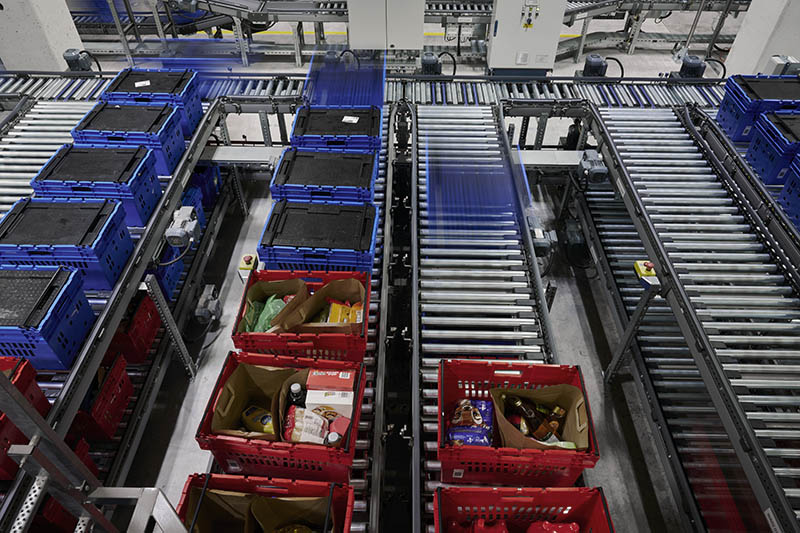
There’s something rotten in the state of food retail
The latest report from Food Waste in America found that U.S. grocers generate about 16 billion pounds of food waste every year. It’s an alarming statistic. Almost 30% of food in American grocery stores is thrown away. Two-thirds of all store shrink comes from perishable departments: fresh meat, produce, dairy, ready-to-eat meals and frozen foods.
How much is food waste costing you? Waste 360 says, “Tackling food waste represents a multibillion-dollar opportunity for grocers.” The World Economic Forum says, “New digital technologies can help rein in food waste by monitoring food freshness, extending shelf-life and pricing food close to expiry more attractively.” Tech-powered change in grocery store operations could also accelerate decarbonization caused by food waste.
A new study from the Pacific Coast Food Waste Commitment shows that by reducing unsold food over a three-year period, food retailers in the region decreased their total carbon footprint by an estimated 30%—the equivalent of taking nearly 270,000 passenger vehicles off the road annually. In other words, technology can support the creation of more sustainable food systems, while tackling climate change.
Modernize cold chain infrastructure now.
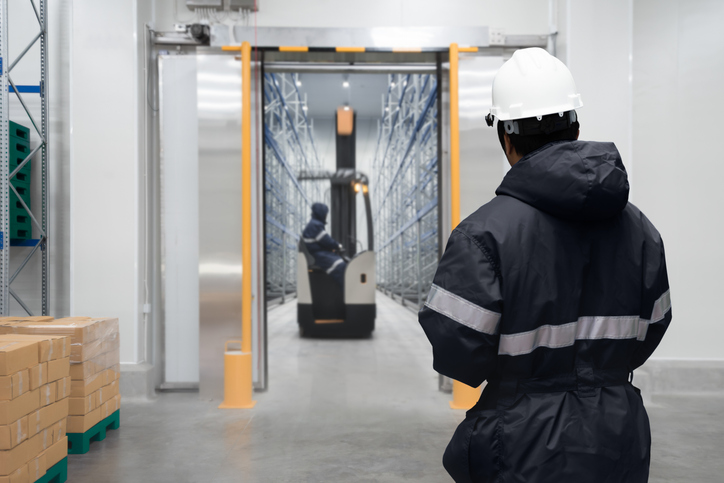
The macro value story for deploying cold chain infrastructure is compelling: address food insecurity, reduce carbon emissions and costs. The micro grocer-level story is also attractive. Automating cold chain operations can help grocers speed fulfillment and reduce the physical strain placed on workers in icy temperatures.
Finding and keeping labor is especially challenging for cold chain operations. Supply & Demand Chain Executive says, “The labor gap is only expected to increase in the next five years.” Bottom line? Manual picking in sub-zero environments is no longer sustainable.Don’t be left out in the cold.
According to Supply Chain Dive, the growth of frozen food sales has increased by 34% since 2019. A shuttle system for all temperature zones makes it possible to fulfill dry goods, perishable foods, refrigerated foods and frozen foods…all in one highly automated fulfillment center.
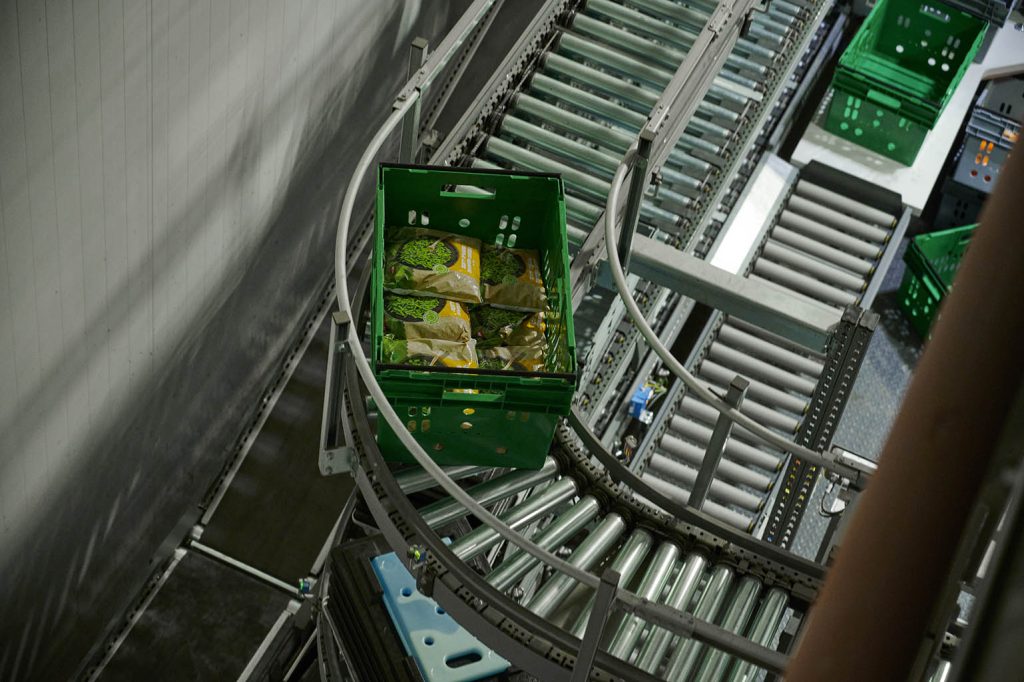
A leading supermarket chain, uses the all-temperature zone shuttle system in its new central fulfillment center (CFC). The system provides the short lead times necessary for optimal freshness and quality across all temperature zones, including fresh produce, chilled and frozen items. The CFC can process up to 7,800 orders each day.
Keepin’ it fresh
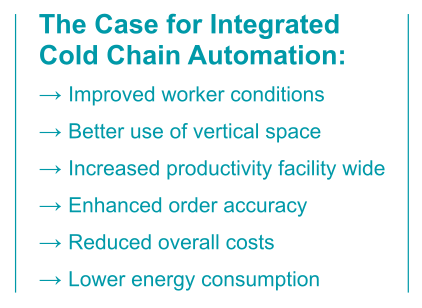
The Case for Integrated Cold Chain
- Automation Improved worker conditions
- Better use of vertical space
- Increased productivity facility wide
- Enhanced order accuracy
- Reduced overall costs
- Lower energy consumption
The all-temperature shuttle system and a goods-to-person (G2P) picking model is at the core of the supermarket chain’s operations. The shuttle system:
- Automatically picks frozen items and delivers a picking performance of 600 units per hour (per workstation)
- Maximizes space and lowers cooling costs with compact, multi-deep storage
- Precisely sequences orders from all temperature zones by optimal delivery route
- Maintains the cold chain all the way to the consumer using the insulated frozen shuttle containers
- Liberates employees from strenuous tasks in sub-zero conditions
- Reduces waste by accelerating delivery
The software-driven four-temp fulfillment workflow
The key to maintaining the cold chain from goods-in to goods-out and finally to customers? Dwell time management. The warehouse management system (WMS) monitors product dwell time of perishable and frozen products in each temperature zone. This information is defined in the item master data.
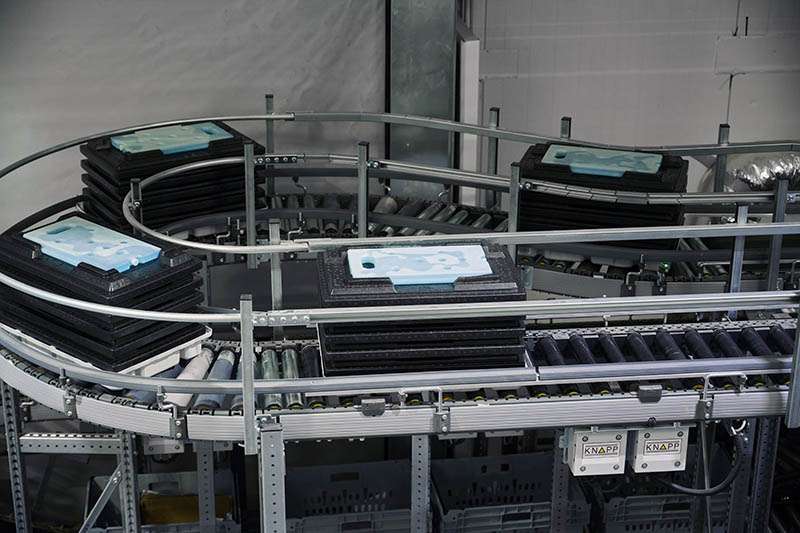
1. The all-temperature shuttles are stored in the shuttle system along with dry goods, refrigerated foods and perishable foods. The shuttles that store frozen goods have been rigorously tested with over 2 million cycles and 7,000 miles of travel.
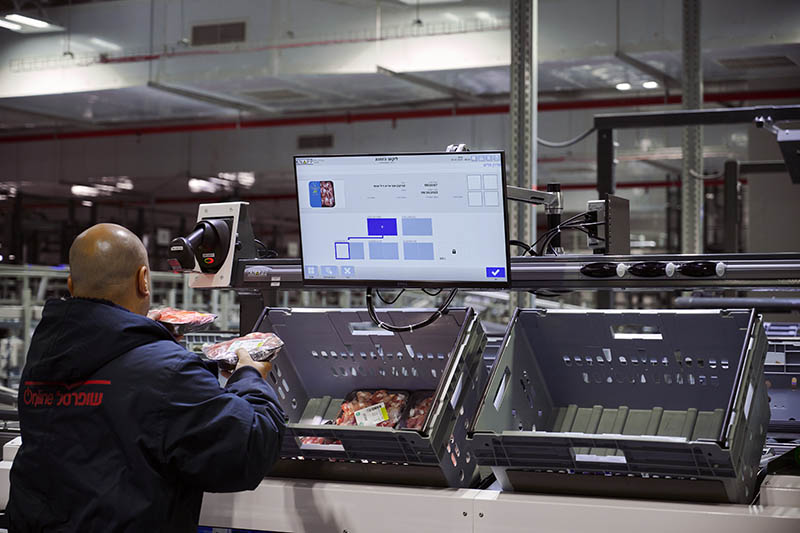
2. The shuttle system buffers orders, so goods from all temperature zones arrive at picking stations in the right sequence at the right time. Algorithms optimize the workload at manual picking stations, keeping picking performance high. What previously took an hour now takes only minutes.
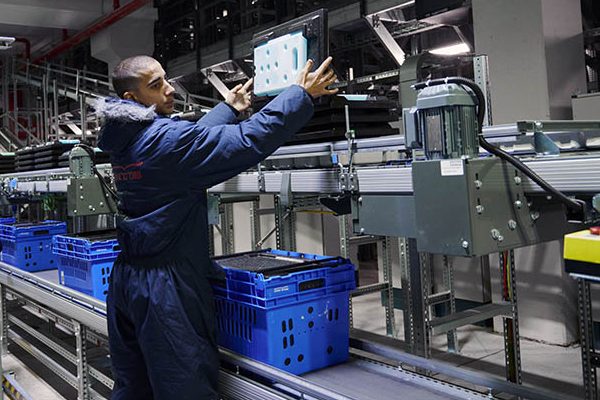
3. When frozen items are retrieved in the shuttle system, employees add lids with integrated cold packs before items are transported to the shipping area. The insulated containers maintain the cold chain all the way to the consumer.