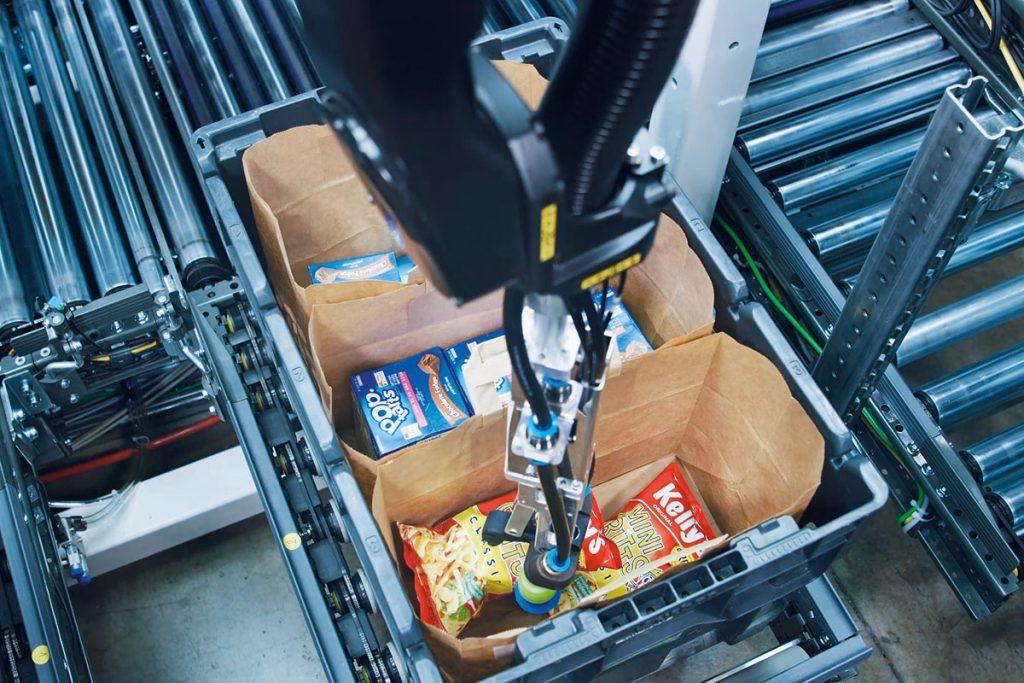
Driving growth, productivity and profitability
Automation technology continues to evolve at a rapid pace. Today, fundamentally new capabilities are having big impacts on the design of logistics networks. No longer focused on automating individual tasks, supply chain leaders are using logistics automation, big data and networking to reshape their supply chain.
McKinsey & Company says, ”Maximum operational impact comes from an end-to-end perspective that seeks to improve efficiency across the entire network, with a comprehensive implementation roadmap spanning all sites.” This approach can also yield better rates and terms with network-wide vendor agreements. Ultimately, a network approach versus a single-site approach to logistics can deliver significant savings and performance improvement.
Meet the ten game changers that are catapulting automation technology into the strategic realm. Discover how they’re helping some companies outwit, outperform and outlast the competition.
Meet the ten game changers that are catapulting automation technology into the strategic realm. Discover how they’re helping some companies outwit, outperform and outlast the competition.
1. Multiple Workflows in One System
Consolidate warehouses and combat the skyrocketing labor, space and energy costs of traditional logistics systems. Limedika, Eastern Europe’s largest pharmaceutical wholesaler and pharmacy chain, handles wholesale, central fill and mail-order prescriptions — all under one roof. A smart mix of automation hardware and software allows them to dispatch multiple deliveries every day to 1,500 pharmacies and hospitals.
THE NETWORK EFFECT:
Victorinox, a global retailer, was able to consolidate 17 warehouses in three countries into one warehouse that distributes to wholesalers, stores and eCommerce customers worldwide.
2. 100% Sequencing Across an Entire Facility
Integrating automation silos is the next productivity frontier. Integration elevates productivity beyond the process level all the way to the facility level. B2B wholesaler, Allied Electronics has integrated all its automation systems to seamlessly sequence their entire intralogistics operation. Direct interfaces enable real-time information exchange between systems to ensure 100% sequencing. No extra software layer required.
THE NETWORK EFFECT:
By escaping the siloed status quo, Allied Electronics can optimize every step within a facility. Ultimately, integrating automation silos makes it possible for them to maximize efficiency, accuracy and profitability across its logistics network
3. Omnichannel Inventory
The ability to access any item at any time and from any place has many benefits, including a better customer experience. Specialty outdoor retailer, REI, was able to combine their entire omnichannel inventory, which includes products destined for stores and customers. Having a single inventory enables efficient order processing and fast delivery times, as well as fewer stockouts and backorders.
THE NETWORK EFFECT:
REI now has four omnichannel distribution centers (DCs) in the U.S. These highly automated DCs expand its domestic distribution footprint and allow REI to improve delivery speed to customers and stores. They also increase throughput capacity and agility while lowering shipping, energy and space costs.
4. Master Data Synchronization
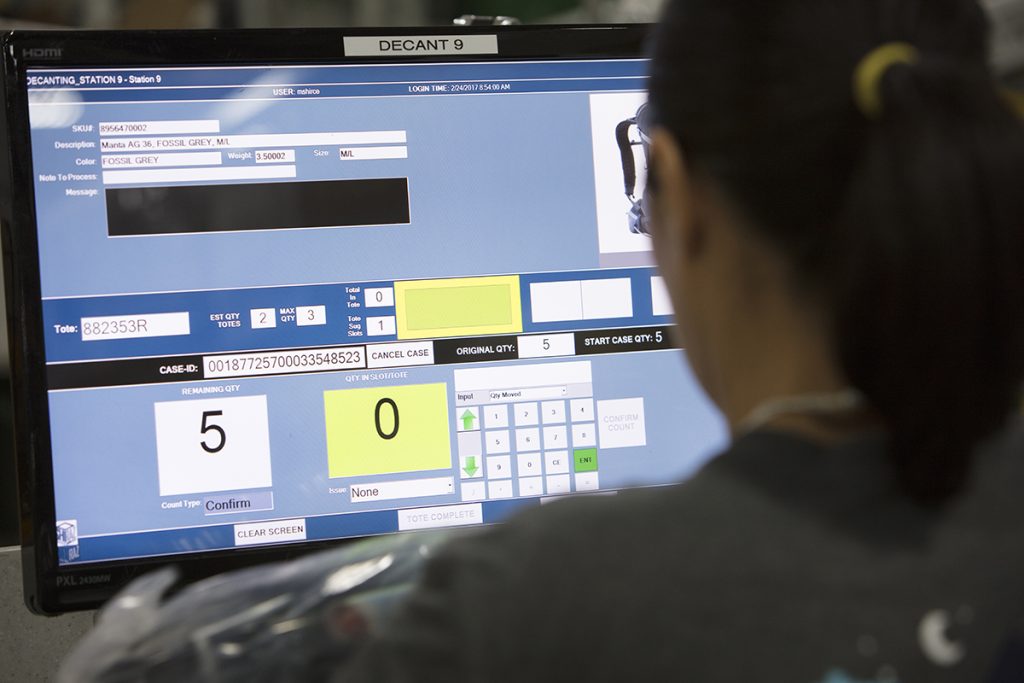
Automating the collection, distribution, maintenance and synchronization of master data continuously improves its quality and quantity. Information such as packaging type, contents, center of gravity, tilting behavior, stackability and much more is essential in optimizing robotic performance. And there’s no better place to capture this information than in the warehouse.
THE NETWORK EFFECT:
Giving robots a deep understanding of the items they touch unleashes untapped robotics performance for rapid return on investment network-wide.
5. Low-Touch Logistics
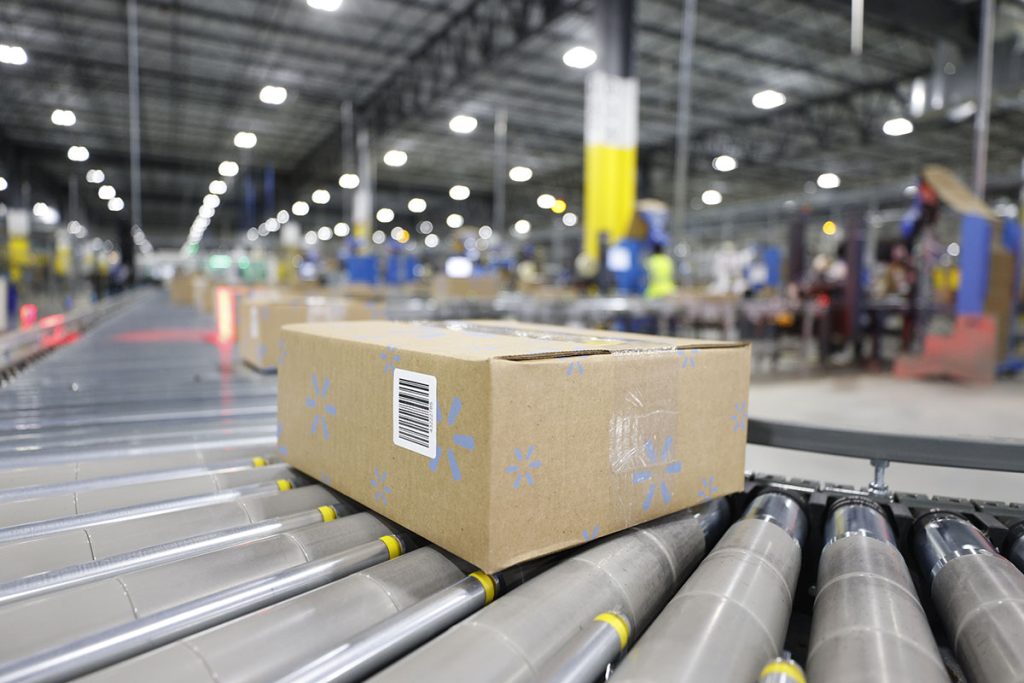
Accelerate fulfillment cycle times and make the warehouse a more attractive place to work with low-touch logistics. By building five new next-generation fulfillment centers (FCs), Walmart doubled the number of customer orders they can fill in a day while providing a positive and more comfortable work environment for associates. The new FCs also provide higher value jobs that increase retention.
THE NETWORK EFFECT:
With high-volume, low-touch logistics an incredible 95% of the country gets next- or two-day delivery on millions of items, including Marketplace items shipped by Walmart Fulfillment Services.
6. Data-Driven Decision Making
One of the most significant improvements in software is the development of warehouse control tower technology. Cloud is the enabler, data is the driver and AI is the differentiator. By using this technology, EDEKA, a major German retailer, has all operational data readily available in one place. The warehouse control tower applies AI-powered predictive modeling and prescriptive analytics to the unified data. This allows EDEKA to spot inefficiencies, predict outcomes and optimize the use of resources in real-time.
THE NETWORK EFFECT:
EDEKA has complete system control and visibility across four DCs, which comprise 12 independent operations. Enhanced intelligence end-to-end makes it possible for them to better manage costs and make smarter decisions, faster.
7. Remote Sensing At Speed and At Scale
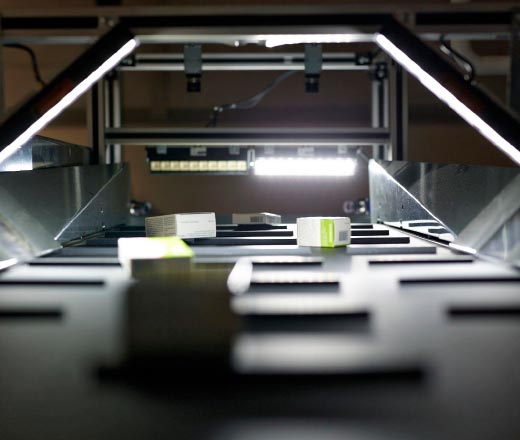
New sensor and vision technologies make it possible to comply with track and trace requirements without compromising the efficiency gains of automation. A major pharmaceutical wholesaler achieved full compliance with the Drug Supply Chain Security Act (DSCSA) ahead of schedule. They did it by addressing space, labor and budget constraints on a case-by-case basis and used a wide range of options that included everything from fully-automated inline scanning to highly efficient manual scanning stations.
THE NETWORK EFFECT:
The pharmaceutical wholesaler was able to build a fully interoperable electronic system for tracking and tracing drug products across an expansive network of DCs — each with its own requirements. The systems also automate quality control, order accuracy and intelligent data capture.
8. Automated Intelligent Internal Transport
At a time when labor shortages have risen to an unprecedented level of concern for supply chain practitioners, autonomous mobile robots (AMRs) are supplementing hard-to-find manual labor. After merging locations, Digmesa enabled a more integrated warehouse by using AMRs to supply injection molding machines with empty containers and to take finished parts to buffer storage.
THE NETWORK EFFECT:
Digmesa can easily and economically expand its use of AMRs without increasing space or labor requirements by automating transport of raw materials and components. They can also combat ongoing labor shortages and rising labor costs by adopting AMRs across all of their sites.
9. Profit-Driving Hyper-Local Fulfillment Models
Food retailers can now pick and choose between a range of preconfigured fulfillment models for high-, mid- and low-volume eGrocery operations. The density of the customer base and the eCommerce volume determines whether to use metro, micro, mini-micro, nano or software-driven manual models. Each model offers the best possible pricing by rightsizing automation, minimizing customization and speeding implementation.
THE NETWORK EFFECT:
Food retailers can construct an intelligent, interconnected fulfillment network to realize their eGrocery strategy and fulfill their promise to the end customer without compromising profitability.