How to Select an Automated Order Processing System

There’s a whole lotta labor-intensive picking going on.

Automated order processing systems are the pulsing heart of every modern distribution and fulfillment center. If you’re evaluating robotic systems for automated order processing, here’s a guide to get you started.

1. Does it effectively utilize every square inch of available space?

Some systems require extensive use of conveyor, sorting and buffering equipment for sequencing. Others create potential bottlenecks because of their lift design and requirements for inter-aisle transfer. Efficient systems automatically store, pick, buffer, sequence, supply workstations and replenish work areas.
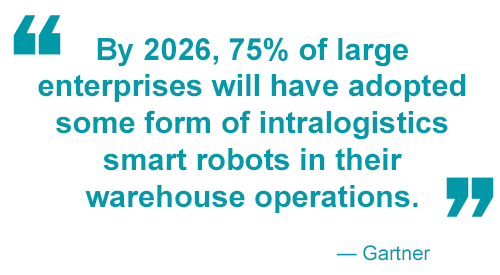
graphic displaying the statistic that by 2026, 75 percent of large enterprises will adopt intralogistics smart robots to improve warehouse efficiency, throughput, and labor productivity.

2. Will it satisfy your need for speed?

Some systems can take up to 5 minutes for order retrieval depending on the depth to dig. Others can leak performance because they require a third-party for system control. Some rely on older ASRS control and have difficulty realizing promised system performance.
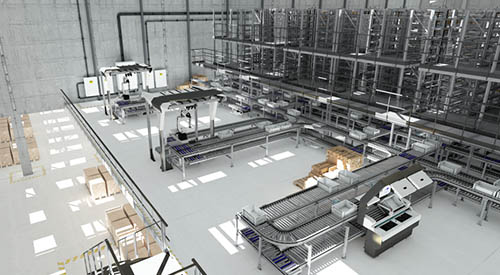
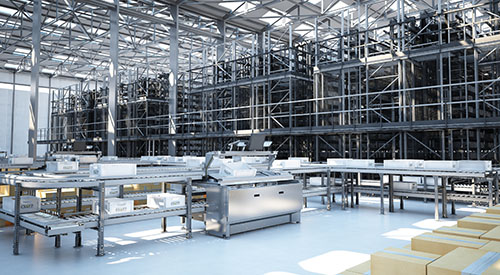
warehouse automation project featuring advanced storage, picking, and conveyor technologies designed to increase throughput, reduce labor requirements, and create a scalable, efficient fulfillment operation.

3. How low can it go?

With ongoing labor shortages, reducing the number of manual touches and improving workforce productivity is now mission-critical. Make sure your system can streamline the fulfillment process by integrating multiple functions including robotic induction, robotic picking, returns, transport conveyance and dynamic sortation.
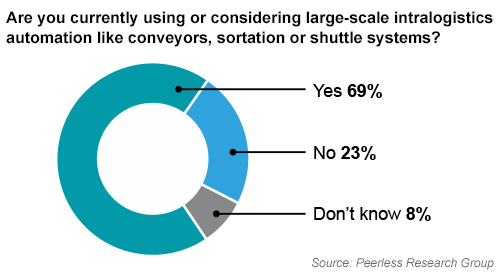
chart illustrating how large‑scale intralogistics automation incorporates various technologies—including shuttles, robotics, and intelligent software—to increase efficiency, reduce labor demands, and support scalable warehouse operations.

4. Is it stuck in the past or ready for the future?

Some systems only work properly for 80% of picks because they’re based on an ABC order structure. In linear systems like these, segmented totes and short-term orders have a massive impact on performance that ripples across the warehouse. The growth of eCommerce will only frustrate performance problems. Coordinating complex individual orders requires dynamic buffering and process decoupling. This non-linear approach ensures constant workflow with no congestion or waiting.
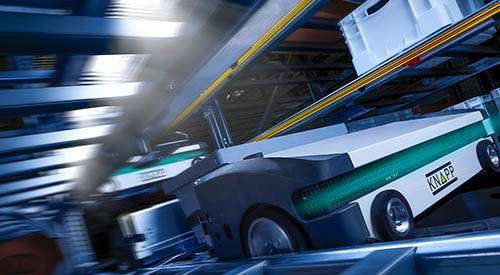
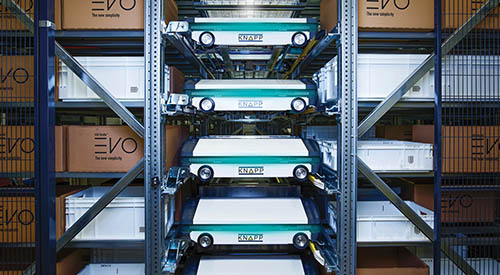
evo‑speed and evo shuttle system rapidly storing, retrieving, and sequencing goods to deliver high‑density storage, fast throughput, and flexible automation for scalable warehouse fulfillment.
5. Can it grow as you grow?
Some systems have limitations in length, height and load carrier handling. Others can’t increase performance without increasing the footprint. Ask whether the system can scale storage locations, rack lines and lifts independently. Ask if additional peripherals such as G2P workstations, robotic picking stations, autonomous mobile robots (AMRs) can be easily integrated.
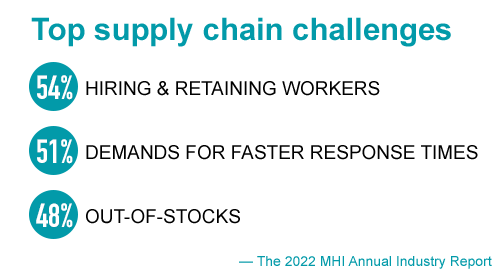
54 percent hiring and retaining workers 51 percent demand for faster response times and 48 percent out of stocks
6. Is it ready for prime time?
Make sure the system is tried, true and thoroughly tested. Ask about the number of installations in your industry. Insist on performance proof points in live production environments. Make sure there’s no single-point-of-failure.
OSR Shuttle 6 system highlighting proven technical maturity, multiple installations, verified performance in live production environments, and built‑in redundancy designed to eliminate single points of failure for high‑reliability warehouse automation.
7. Is it purely transactional?
Transactional systems store items based on available space. They don’t consider inventory management. They treat fast, medium and slow moving items the same. Intelligent systems decide how items should be stored and sequenced for maximum efficiency and faster throughput.
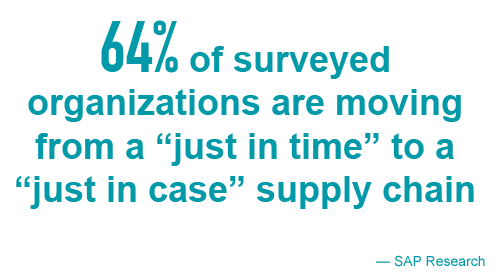
Graphic showing that 64 percent of surveyed organizations are shifting from a just in time to a just in case supply chain strategy, based on SAP research, highlighting the growing need for resilience and inventory buffer in modern operations.


8. Does it support sustainable packaging?
There’s a growing call from consumers for more sustainable packaging. They don’t like their online orders delivered in oversized packaging. With rising DIM charges, many companies are no longer willing to ship air. Make sure your order processing system can support in-line packaging systems that produce right-sized dispatch cartons without slowing throughput.
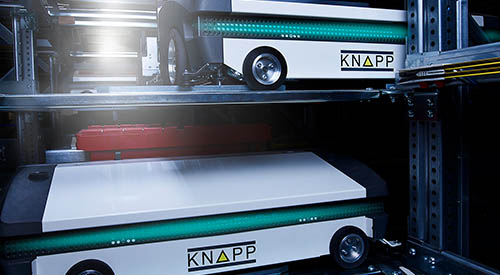
EvoStack 8 automation system illustrating support for sustainable packaging through in line integration with automated packaging equipment that produces right sized cartons, helping reduce oversized shipments, lower DIM charges, and maintain high throughput while meeting consumer expectations for sustainable order fulfillment.
9. Can you continue operations during maintenance?
Some systems require shutting down the entire system to recover defective robots. Others have to shut down parts of adjacent systems. Some have no well-conceived maintenance concept at all! Ask how robots are accessed during maintenance. Is recovery difficult and dangerous for maintenance personnel? Does service require personal safety equipment? Is the system designed for safe response, troubleshooting and repair?
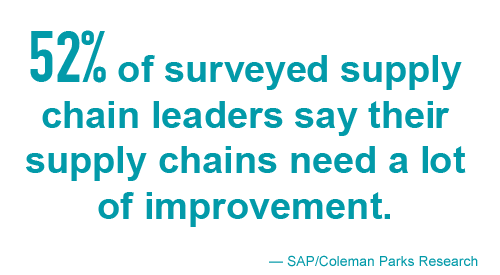
Graphic showing that 52 percent of surveyed supply chain leaders report their supply chains need significant improvement, based on SAP and Coleman Parks Research, emphasizing the ongoing challenges and performance gaps across global supply chain operations.
10. Is it safe?
Some systems can only be sprinkled from the top. Others require oxygen-reduced environments. Some stack totes, which leads to extreme concentration of fire load. Others require Li-Ion batteries and fiberglass covers.
Shuttle Evo systems shown with emphasis on warehouse safety, highlighting the importance of comprehensive fire protection through in‑rack sprinklers to avoid fire load concentration, reduce dependence on oxygen‑reduced environments or specialized covers, and ensure safe, reliable automated storage operations.
11. Select a product and a partner.
Don’t just pick a product. Pick a partner that can help you build logistics value over time. Make sure they have the kind of intralogistics know-how that can help you mitigate labor shortages by minimizing manual touches. Discuss implementation and expertise in your industry. Make sure they have an extensive customer service network and you’ll have a single point of contact.
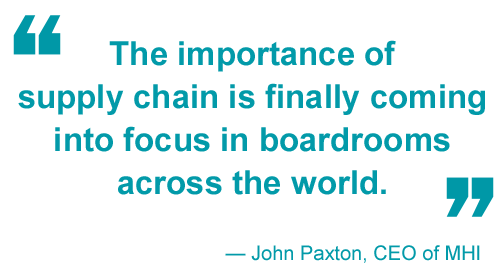
Graphic stating that the importance of supply chain management is finally coming into focus in boardrooms across the world, attributed to John Paxton, CEO of MHI, reflecting the growing strategic attention supply chains are receiving at the executive level.

More insights

Subscribe to our blog

Let’s make complexity simple.