Gamification in Logistics

A Tool to Enhance Performance and Sustainability

Level Up!

While technology and automation are becoming increasingly important in logistics, human resources remain vital in warehouse operations. Labor is a top operating cost and companies are focused on increasing employee productivity. Gamification, a new approach for increasing staff performance, applies game mechanics into non-gaming processes to drive business goals.

Gamification doesn’t necessarily mean playing a game. It simply means adding elements of game playing (e.g. point scoring, competition, rules of play) into tasks and processes that involve employees. Using leaderboards, performance levels, performance measurement, rewards and recognition can all enhance performance and even sustainability.

The six big benefits of gamification

Gamification is being used successfully in many industries, including logistics. Our redPILOT software enables gamification, which can be used in any process to improve performance, establish closer ties with the organization and bolster commitment among teams. Here’s how gamification delivers six sizable benefits to the companies that use it.

  1. Increase engagement by incentivizing improvements in desired behaviors.
  2. Reward performance with individual and team awards.
  3. Recognize achievement with leaderboards and performance levels.
  4. Motivate workers to improve performance with performance measurement and individual feedback.
  5. Identify where additional training is needed by collecting data on individual behavior and performance.
  6. Challenge workers with friendly competitions. If an employee sees that they or their team could be at the top of the leaderboard, they are likely to maintain or increase their effort.
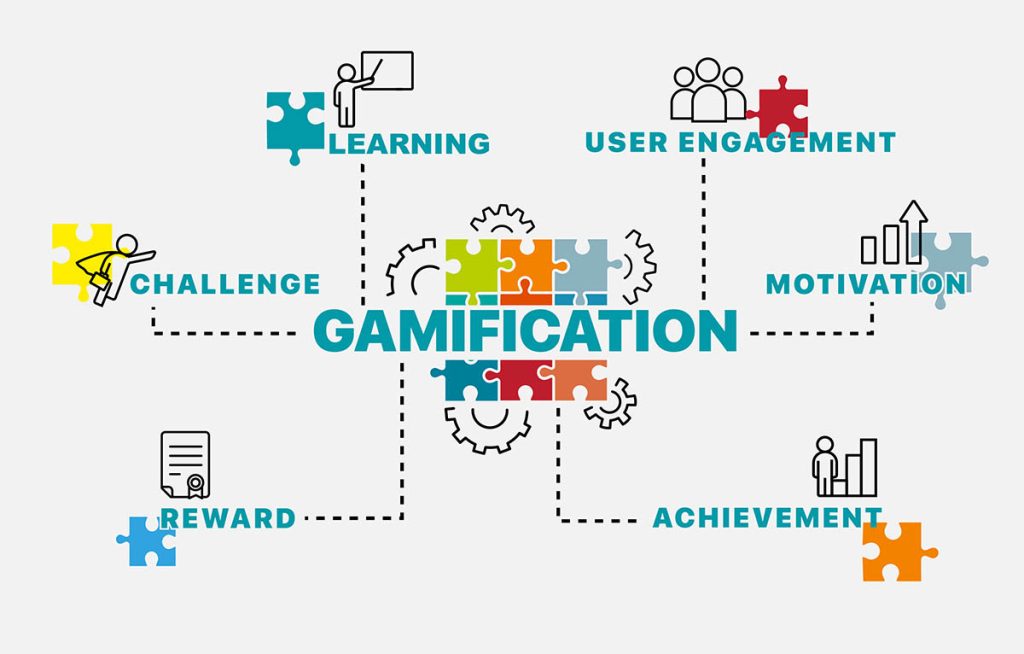
gamification graphic Learning, User Engagement, Motivation, Achievement, Reward, Challenge

With redPILOT, you can use gamification to help you attract and retain better talent and “level up” your workforce by providing an innovative and enjoyable work environment that increases employee satisfaction and offers opportunities for improvement.

Gamification in logistics: Three real world examples

Amazon has been using gamification since 2019. The company introduced a variety of Workstation games where warehouse workers earn digital currency for achieving desired behaviors and goals. The digital currency can be exchanged for company merchandise like t-shirts and water bottles. Warehouse workers can also win expensive consumer electronics, like game consoles or an Apple Watch, by performing well during busy peak seasons. Amazon has already expanded their use of gamification to at least 20 warehouses.

One company applied gamification to fleet management. Drivers are assigned missions and get points when missions are completed. Weekly leaderboards allow drivers to see their ranking, which encourages competition between drivers and makes their work more fun.

PL Kenco Logistics uses gamification in its warehouses to drive team-based competition with a Fantasy Football-like system that tracks volumes. The winning team may be rewarded with a pizza party or some other team building reward. The company has seen productivity improvements in the 3% to 5% range.

Gamification in sustainability: Two real world examples

Citibank’s “Step-Up Initiative” promotes more exercise and lower energy consumption by encouraging employees to take the stairs instead of the elevator. Participants log how many stairs they climb and how many steps they take. This data is then compared to other Citi branches around the world. Citibank’s “Drink Up” program encourages employees to refill water bottles. This has led to a reduction in the number of plastic bottles used.

SAP® uses gamification to reduce car emissions and spending on company cars. The company has developed an app that motivates employees to carpool. Carpoolers collect points, track their progress and donate the money they save through the initiative to charities of their choice.

These are just a few of the many ways companies can use gamification to drive business results. When you utilize gamification in your logistics operation, you can boost performance, sustainability and employee satisfaction.

More insights

Subscribe to our blog

Let’s make complexity simple.