
Master the art of movement in your facility
Deploying more automation is now a top strategy for acquiring, managing and retaining labor, while streamlining high-volume processes and mitigating human error. A growing number of supply chain leaders have fully automated core logistics processes including:
- Order storage and retrieval
- Replenishment
- Single-item picking
- Sorting and sequencing
- Palletizing
- Transport
- Packing
- Returns
Automating these processes allows them to increase throughput, lower overall operational costs and do more with the same size staff.
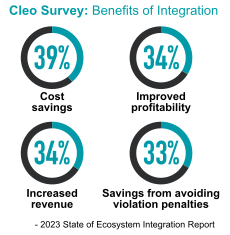
Integrating automation silos is the next productivity frontier; the Holy Grail. The goal is to elevate productivity beyond the process level all the way to the facility level. Whether moving parts through an assembly line, replenishing hundreds of stores or fulfilling millions of orders a day, facility wide productivity can deliver significant savings in time and money.
The difference between success or failure? Seamless sequencing. The flow of goods and information as well as people, processes and automation technologies must be seamlessly sequenced. Achieving 100% sequencing can be incredibly complex. There are so many moving parts and the larger a system becomes, the more challenging it is.
Seamless sequencing requires orchestration of all automated systems.
To achieve 100% sequencing across an entire facility, all automation systems must cooperate. That means core logistics systems each need to be capable of providing 100% sequencing on their own. Anything short of 100% will result in bottlenecks, backups and even halts in production.
Some companies are trying to solve the sequencing challenge with:
- Dedicated sorter lanes, which require an enormous amount of space and expense and are less flexible than other options
- “WMS solutions,” which Modern Materials Handling says, “typically lack the ability to optimize and plan all machine and labor resources and material moves and staging to ensure complete orders get out the door.”
- Third-party software solutions such as warehouse execution systems (WES) and multiagent orchestration platforms, which add an extra layer of software, cost and complexity
Let’s be direct.
There is a different and better approach: utilize a warehouse control system (WCS) that’s purpose built for automation and deploy automation systems that have intelligent task control. In this approach, the WCS interfaces directly with the individual machine controls. Direct integration eliminates the need for extra layers of software and enables the real-time information exchange required for 100% sequencing.
When an automation-ready WCS directly interfaces with individual machine controls, the WCS connects all logistics processes and balances workload facility-wide based on real-time feedback from each subsystem. Individual machine control systems manage execution tasks and automatically adjust to internal system issues that may impact sequencing.
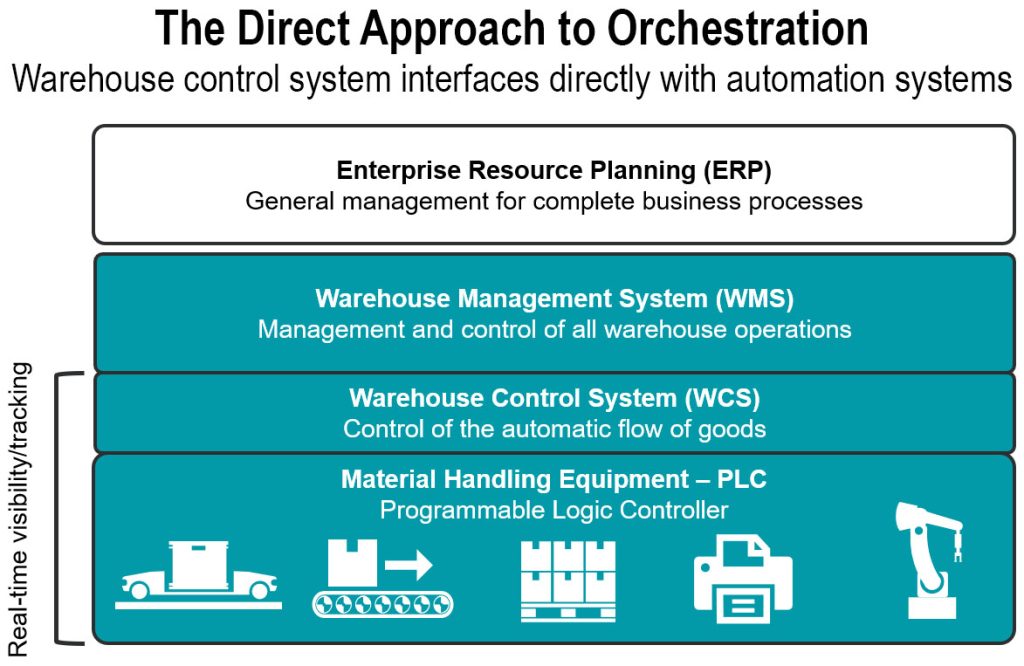
What capabilities should individual machine control systems have? It depends on the system.
- The control system for shuttles should be able to monitor locations and conditions of shuttles and lifts as well as volumes at picking stations and different pre-, infeed and outfeed zones. It should also be able to react to changes in real-time and make adjustments in mere milliseconds.
- The control system for single-item picking robots should be powered by AI, able to handle errors intelligently around the clock, as well as learn and share learnings with other robots.
- A pocket sorter control system should be able to ensure 100% sequencing for any sorting methodology and be self-adjusting for rapid detection and real-time mitigation of challenges.
- The control system for automated palletizers should be able to handle specific packing criteria for every order and every store. It should also be able to calculate ideal packing patterns, mitigate in-store labor costs and bypass or loop exceptions if any issues occur.
- The fleet control system should be able to manage, control and coordinate automated transport vehicles. It should also be able to automatically select the most suitable route for each vehicle depending on what’s needed at the moment.
Ideally, automation systems should be modular, so they can be deployed individually. Then, when you’re ready to integrate standalone automation systems, each system should easily integrate into the software infrastructure. Peerless Research Group says integrated systems like these are preferred by supply chain leaders because they accelerate implementation, speed payback and increase performance.
Seamless sequencing in action.
Some of the world’s biggest and best supply chains are achieving 100% sequencing in their manufacturing, distribution, fulfillment and omnichannel operations. Here are seven examples.
- Walmart, the largest retailer in the world, has doubled the number of customer orders they can fill in a day while providing a positive and more comfortable work environment for associates. The retailer’s Next-Generation Fulfillment Centers (FCs) achieve 30-minute click-to-ship performance on millions of orders and 95% of the U.S. population gets one- or two-day shipping using next-gen and traditional FCs.

- The largest central fill pharmacy in the UK uses pack-to-patient technology in combination with a high-density storage and single-item picking system, as well as central belt and A-Frame technology. The highly orchestrated pharmacy dispenses one million prescriptions per week, operates six days a week, 15 hours a day and serves 600 retail pharmacies.
- When national grocer Kroger modernized and expanded its Great Lakes distribution center (DC), the food retailer doubled capacity and significantly increased performance. A shuttle system and automated mixed palletizer work together in complete harmony to fully automate order preparation for 115 stores with different structures. Stores are filled more efficiently thanks to intelligent packing algorithms and selectable picking criteria.
- GXO Logistics, the world’s largest pure-play contract logistics provider, precisely sequences storage and retrieval and robotic picking into pockets to ensure items in an order picked at different times get to the human packer at the same time.
- BVLGARI, provider of high-quality lifestyle products like Parfums Christian Dior and Bulgari watches, was looking for a hardware provider who could deliver an integrated software solution. That’s why they chose KNAPP. Their omnichannel fulfillment center seamlessly sequences orders to patrons and stores, integrating the shuttle system with robotic picking and palletizing. Robots also assist with goods-in and shipping.
- Global online retailer NEXT achieves lightning fast fulfillment — up to 15,000 items per hour — with seamless sequencing and dynamic orchestration. Every source is connected to every destination and redundancy is built in at every step of the workflow, so there is no single point of failure. The retailer consistently meets aggressive SLAs. One-touch returns handling means 90% of returns go back into the system within three days, avoiding any merchant account penalties.
- B2B wholesaler, RS Group (formerly Allied Electronics), has integrated a shuttle system, AI-powered picking robots and pocket sorter system to make the most of the workforce they have. The system ensures 100% sequencing for any sorting methodology and provides 100% traceability by tracking inventory from when it enters until it leaves the building.
